Data Centers Are the New Gold in Malaysian Real Estate... so Should You Care as a Homeowner?

You've probably seen the headlines. Google, Microsoft, Amazon, Nvidia... global tech giants are pouring billions into Malaysia, building massive data centers across Johor, Selangor, and beyond. It's being called one of the biggest economic transformations in Malaysia's recent history.
But if you're a regular homeowner or someone looking to buy a home in KL or the Klang Valley, you might be wondering: does any of this actually affect me?
The short answer is yes. Just not always in the way you might expect.
Here's what's really happening, and what it means for you;
What Exactly Is the Data Center Boom?
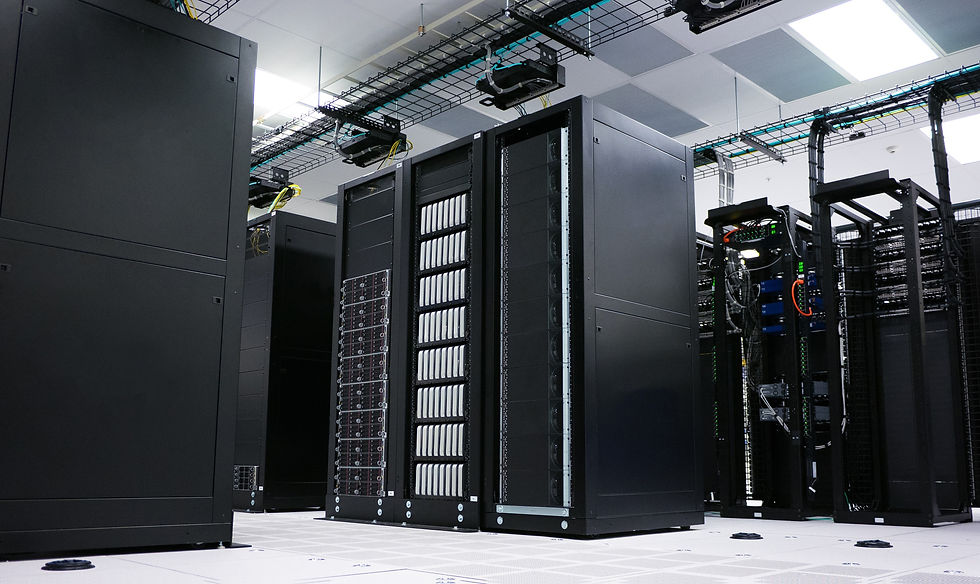
Data centers are large facilities that store and process the data that powers cloud computing, artificial intelligence, streaming services, and nearly everything digital. As demand for AI explodes globally, tech companies need more and more of these facilities, and they've been choosing Malaysia as a prime destination.
Why Malaysia? A combination of competitive land costs, reliable power infrastructure, proximity to Singapore (which has run out of space), and strong government incentives. Malaysia has become one of Southeast Asia's hottest data center markets almost overnight.
The numbers are staggering. AirTrunk alone announced a RM12 billion investment in two new data centers in Iskandar Puteri, Johor in April 2026, which brings its total Malaysian commitment to roughly RM27 billion across four campuses. Malaysia's data centre capacity is expected to more than double to 2,055MW by the end of 2026, with a further 3,500MW already planned beyond that.
Selangor has been particularly active. In Q1 2026, the state attracted the highest of any state in Malaysia, a record RM33.5 billion in approved investments driven largely by data center projects in the Sepang, Dengkil, and Kuala Langat corridor near KLIA.
What It's Done to Industrial Property (And Why That Matters)
The most immediate impact of the data center boom has been on industrial land prices, and the movement has been dramatic.
Average industrial land prices in Johor rose to RM86 per square foot in 2025, an 8.4% year-on-year increase. Premium plots near confirmed hyperscaler facilities in Iskandar Puteri are now commanding between RM120 and RM150 per square foot. In Selangor, IOI Properties sold roughly 136 acres in Banting to Bridge Data Centers for approximately RM740 million, working out to about RM115–137 per square foot.
For context, these are industrial land prices. But when land values move this sharply in an area, the ripple effects don't stay in the industrial sector.
So How Does This Affect Homeowners?

This is the question that matters most if you own or plan to own residential property in Malaysia. The answer has several parts.
1. Jobs and Population Drive Housing Demand
The single most important way data centers affect residential property is through employment. Large-scale investment creates jobs both during and after construction, but in the wider ecosystem that forms around it: logistics, utilities, security, facilities management, retail, and food and beverage.
Residential property near Iskandar Puteri, Medini, and the Johor Bahru central business district is already experiencing heightened demand from relocating managerial staff, technical personnel, and Singapore-based operations teams within the data center ecosystem. More workers moving into an area means more demand for homes, which typically means firmer prices and rental rates.
In Johor, house prices rose 5.7% in 2025, one of the strongest performances of any state. This is driven by a combination of the RTS Link, the Johor-Singapore Special Economic Zone, and broader economic activity, with data centers a key part.
The same dynamic is beginning to play out in Selangor, particularly in the South Selangor corridor near KLIA, which is emerging as Malaysia's busiest digital infrastructure corridor.
2. Construction Costs for New Homes Could Rise
Here's a less discussed impact that will affect buyers of new launches in particular.
Data centers are competing for the same pool of skilled workers as residential construction, particularly mechanical, electrical, and plumbing (MEP) specialists. As these professionals become more sought-after, their wages rise. And when labour costs go up, so does the cost of building new homes.
This feeds into a trend already visible in 2026: construction costs are rising, which puts a floor under new launch prices. If you're waiting for new launches to get cheaper, this is part of the reason they probably won't.
3. Living Near a Data Center — Should You Worry?
Some homeowners and buyers in Johor have expressed concerns about data centers being built near residential areas. The issues raised include noise from cooling systems, high electricity and water consumption, and general disruption.
The professional consensus is reassuring, but these are legitimate concerns worth understanding. JLL Malaysia Managing Director Jamie Tan said at the firm's Q3 2026 press conference that concerns about data centres undermining demand for nearby residential properties are unfounded. He noted that data centres are subject to planning requirements including adequate buffer zones between facilities and residential developments, designed to ensure they do not affect the marketability or liveability of nearby housing.
The Malaysian government has also introduced stricter sustainability requirements for new data center approvals. Newer projects are increasingly required to demonstrate water and energy efficiency. The 500MW YTL Green Data Center Park in Johor, for example, is powered by solar energy, the first such facility in the country.
4. Land Competition With Housing Is Minimal
One concern that has circulated is whether data centers are eating into land that would otherwise be used for housing. The data suggests this is overblown.
Between 2021 and mid-2025, Malaysia approved 143 data center projects covering an estimated 14,300 acres. While that sounds like a lot, it represents only about 0.02% of Malaysia's total land area. The direct impact on housing land supply is minimal given that Malaysia currently has over 32,000 unsold completed residential units and more than 19,000 unsold serviced apartments sitting in the market.
The land competition issue is real but highly localised, and it can affect specific strategic corridors in Johor, not the broader residential market.
What This Means Depending on Where You Own or Plan to Buy

If you own or are buying in Johor (especially Iskandar Puteri, Medini, or JB city): The data center boom is a positive for your property. Job inflows, infrastructure upgrades, and rising economic activity in the state all support residential demand and prices. The market here is arguably the most dynamic in Malaysia right now.
If you own or are buying in South Selangor (Sepang, Dengkil, Kuala Langat corridor): Watch this space closely. The South Selangor industrial corridor is becoming Malaysia's second-biggest data center hotspot. As investment flows in and employment grows, residential demand in nearby townships could strengthen meaningfully over the next three to five years.
If you own or are buying in KL and the core Klang Valley: The direct impact is less pronounced, but still relevant. KL is Malaysia's financial and connectivity center, and data center investment is reinforcing its importance as a regional hub. The broader economic confidence that comes with Malaysia attracting global tech investment supports the overall property market.
If you're buying a new launch anywhere in Malaysia: Be aware that rising construction costs are one more reason new launch prices are unlikely to fall. Factor this into your timing.
The Bigger Picture
Malaysia's emergence as a regional data center hub is not a passing trend. The IMF has cited data center activity as a key support for Malaysia's economic growth. The government is actively positioning the country as a digital infrastructure leader in Southeast Asia, with policies and incentives designed to attract sustained long-term investment.
For homeowners and property buyers, this matters because real estate values are ultimately driven by economic activity, job creation, and population movement. The data center boom is delivering all three states, but with ripple effects across the broader economy.
You don't need to understand hyperscale computing to benefit from what's happening. You just need to understand where the people and the money are going and position yourself accordingly.
👉 At Ascons Real Estate, we track these market shifts closely and help our clients understand what they mean at the ground level. Whether you're buying your first home, looking to invest, or deciding whether to hold or sell. If you'd like to understand how the data center boom affects your specific property or area, get in touch with our team. Kenms Ang
+60 19-686 2265


Comments